
Contextual Old Testament Theology?; held in the joy of God; and what makes a bad/OK/great essay

Welcome to my newsletter, ‘Bible, Mission, and More’, where I share what’s on my mind as I teach, research, and write on the Bible and mission, children-at-risk in the Bible and contemporary society, Psalms and Wisdom Literature, and a range of other topics. I teach at All Nations Christian College in the UK, though views are my own. You may also like to check out my Bible and Mission website.
Each Tuesday I’ll share something I’ve read, something I’ve written or recorded, something on learning and teaching, and a quote to reflect on.
Something read – Wisdom and Old Testament Theology in an Indian context
Last year I wrote about Kondasingu Jesurathnam’s article, ‘Dalit Interpretation of the Wisdom Literature with Special Reference to the Underprivileged Groups in the Hebrew Society: A Mission Perspective.’ You can (re)read that post here.
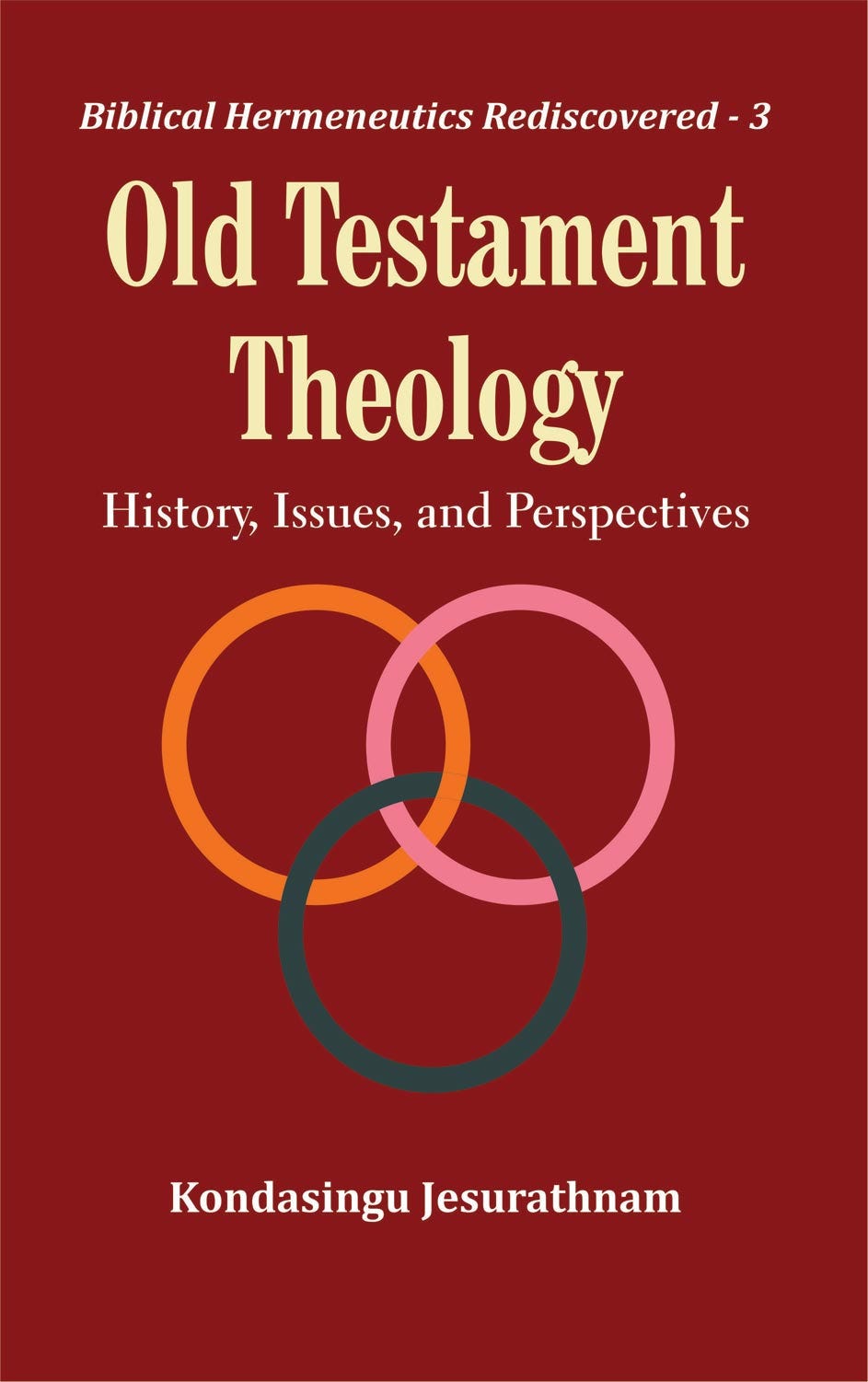
I’m reading quite a bit of Old Testament Theology at the moment, not least because I now teach a final year undergrad course on OT Theology at All Nations. One of the volumes I picked up over the Summer (and which I’ve yet to read) is Jesurathnam’s 2016 volume, Old Testament Theology: History, Issues, and Perspectives (Christian World Imprints). Looking over the blurb and contents page, his purpose was to write a textbook for OT Theology that is also sensitive to his context in India. The first two chapters of the book are reviews of the history and debates in the discipline. The third chapter focuses on ‘Some Major Theological Topics in the Old Testament in an Integrated Perspective in the Light of Indian Context’ with chapter four reviewing ‘Select Themes of the Old Testament and their Theological Significance’, again exploring their relevance to his Indian context.
I’m reluctant to call this a ‘contextual’ OT Theology because doing so could imply (wrongly) that other (i.e., Western) works are not contextual. What I would say is that it is rare and, therefore, welcome for a work on OT Theology to engage so intentionally with the question of contemporary contexts.
Another neglected aspect he addresses is the place of wisdom in OT Theology. The other day I read from a section called, ‘Ministry of the Old Testament Sages and Apocalyptic Thinkers and their Relevance in the Indian Context’. Here Jesurathnam reviews the way the Wisdom Literature (specifically Proverbs, Job, and Ecclesiastes) makes room for reflection on the poor and marginalised. Each in their own ways, these biblical books highlight a concern for the marginalised, which Jesurathnam applies to the experience of Dalits in India under the headings: wisdom ethic of the social order; powerless, needy, helpless and underprivileged; wisdom life based on observations of misery and oppression; tsedaqa [righteousness] as a cardinal virtue of the wise; and retributive justice.
I’m looking forward to digging into the rest of the book!
Something written – a talk on the joy of God
Each Monday during term a member of staff at All Nations will give a biblical reflection at our start-the-week ‘Kick Off’ gathering for students and staff. This term our theme is the fruit of the Spirit as lens through which to understand God. Recently I spoke on the topic of ‘joy’. Regular readers to this substack will know I’ve been working on the subject of joy and the Bible so I was keen to volunteer for that one.
I spoke about the joy we experience as a response to salvation. My favourite parable is the one Jesus tells about the hidden treasure in Matt. 13:44 – ‘I can’t believe I’m in on this!’ is an entirely appropriate response. I spoke about the joy in heaven described in Luke 15. But I also spoke about the joy of creaturehood; that our Creator God intends for us to take joy in the gift of life and the gifts of life (as urged by the Preacher in Ecclesiastes – see my posts here and here on this).
And I spoke about God as joyful, evidenced throughout Scripture, in contrast to the dour picture we often entertain. Terence Fretheim’s article ‘God, Creation, and the Pursuit of Happiness’ was particularly useful for this (in Brent Strawn’s edited volume, The Bible and the Pursuit of Happiness: What the Old and New Testaments Teach Us about the Good Life (OUP, 2012).
Finally, I wondered what all this meant for those who – for reasons of grief, mental health, or something else – find they cannot experience joy for the moment. Could we say with some comfort that those in that place are somehow held safe in God’s joy, even if they do not feel it at present? John Swinton’s work on memory and dementia provoked this thought as a possible parallel (see this beautiful reflection ‘Held in love: A theological and pastoral response to dementia’ by my friend Ian Stackhouse that references Swinton). There’s something here I want to come back to at some point.
Learning and teaching – What makes a bad/OK/great essay?
I came across this video recently by an Oxford tutor who explains the ingredients of an excellent essay. Actually, what he does is describe the typical characteristics of an essay at different levels from a fail, all the way up to top marks (in UK education-speak: a fail; a pass; a 2:2; a 2:1; and a First).
If you are looking to improve your essay writing and learn more about what your markers are looking for, this is eleven minutes of your time very well spent. I particularly appreciated the way he describes the upper end distinctives, highlighting the importance of bringing out your own voice more.
Quote – Kondasingu Jesurathnam on biblical wisdom and God’s mission
‘The sages remind us that God has special concern for these marginalized communities and the Christian church should take this mission [of] God seriously in its talk and walk.’ (see above, p. 165)
Thanks for joining the journey and see you next week,
Tim