
Chapter now published and open access: Blessing, “Shalom” and Lament: Biblical Perspectives on Child Spirituality

A few year’s ago I worked on a project as part of a team of theologians looking at the spirituality of children. We were from different Christian traditions, church denominations, theological disciplines, and cultural contexts, and each wrote a paper from our particular perspective.
This has truly been one of the highlights of my working life; most precious of all is that these colleagues have now become friends. When we concluded that stage of our research our project lead, the brilliant Dr Kati Kraft, asked if we wanted to publish our papers. We agreed and she began exploring publishing options. The end result is a an edited volume with Routledge that has also expanded to include perspectives from outside of the Christian tradition: Children, Religion and Development; Perspectives on Spirituality and Practice.
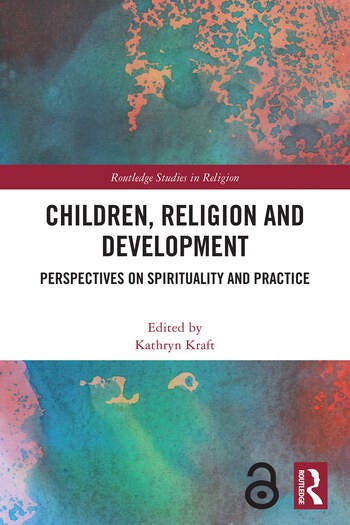
My own chapter is ‘Blessing, “Shalom” and Lament: Biblical Perspectives on Child Spirituality’. It focuses on biblical material and explores themes such as blessing and shalom and what they mean for child spirituality and flourishing. In particular I focus on the Aaronic blessing in Num. 6 and Jesus’ blessing of the children in Mark 10. It struck me that there are some significant connections between these two acts of blessing, both of which exemplify God’s desire to see, to bless, and to bring shalom. I then look at four related themes:
Experiencing shalom in our personhood
Experiencing shalom in justice and righteousness
Experiencing shalom in lament
Experiencing shalom in agency
If you are familiar with my work over the last few years you will notice a number of familiar themes. In a way this chapter brings together a number of ideas and texts I’ve been working on for some time.
We were also asked to include an example of what our ideas look like in practice. For this I chose to highlight the work of thirtyone:eight, the UK-based Christian safeguarding charity.
Although the hardback is super expensive, the great news is that funding was secured to make the ebook open access, so you can read and even download the whole thing for free on Routledge’s website:
Children, Religion and Development Perspectives on Spirituality and Practice
Here is a direct link to my chapter:
Blessing, “Shalom” and Lament: Biblical Perspectives on Child Spirituality
To give you taster, here is my opening page:
Introduction
Preaching at a young child’s baptism, North American theologian Ellen Davis sets out a challenge to those in attendance, calling all involved in the boy’s life to recognise their role in his growing understanding of his own preciousness and purpose in the sight of God:
‘We, [his] parents and brother, relatives, friends, will fulfill our responsibility whenever, through our words and actions, he feels how infinitely precious he is in God’s sight, whenever we enable him to glimpse something of God’s dream when forming him in the womb, when through us he glimpses the beauty that he, and he alone, can contribute to the glory of heaven.’ (Davis, 2016, p. 36)
The purpose of this chapter is to explore some biblical perspectives on what it might look like for a child to experience the sense Davis describes of being known and loved by God, and recognising their infinite value and purposeful place in God’s world. In other words, what might it look like for a child to experience the love of God?
I approach the topic as a Christian scholar, trained in the branch of theology known as Biblical Studies, that is, the study of the text of the Christian Bible, including both Old and New Testaments. My aim in this chapter is to build up a picture of what it might look like for children to experience God’s love by highlighting a number of relevant passages and themes. As such it will not be an exhaustive treatment of what the Bible has to say on the matter, but will at least identify a range of important questions to consider. My starting point will be to focus on the language of ‘blessing’ through a reflection on Aaron’s prayer of blessing in Num. 6 and a story of Jesus’ blessing children in Mark 10. I am particularly keen to unpack what blessing and peace look like in these passages.
I will then briefly explore four following themes, discussing the significance of bearing the image of God, the call to justice and righteousness, the need for lament, and the question of agency. As such I will show how spirituality is multifaceted and, so, attending to the spirituality of children must be appropriately nuanced in order Blessing, “Shalom” and Lament that they might experience blessing and peace in their different relationships: in themselves, in community, in creation, and with God and in God’s purposes.
Thanks for joining the journey and see you next week,
Tim